

Xiaomi Mi A1 Review: Android One Done Right
We're all familiar with Xiaomi's status equally one of the most popular budget telephone makers in the Asian market place. The Chinese giant offers you a value-for-coin packet with its upkeep devices, running a forked version of Android called MIUI. While many users love MIUI and its superior customization abilities, at that place are some who still promise for a stock feel in conjunction with the brilliant hardware and toll. This is where Google stepped in to relieve the day. Google recently partnered with Xiaomi to revive its once-forgotten Android 1 program with the launch of Xiaomi Mi A1.
Different the previously released Android One devices, which were quite sub-par due to hardware restrictions, the Mi A1 is a great mix of hardware and software for a really attractive price of ₹fourteen,999. We've heard users singing praises for the device over the by few calendar week, so I decided to put the Mi A1 to the test myself. Read this in-depth review to know everything about my experiences with the device:
Specifications
Before nosotros accept a detailed await at Xiaomi's Mi A1 in the mankind, allow the states quickly check out the specifications of the device:
| Dimensions | 155.4 x 75.eight ten 7.iii mm |
| Weight | 165 g (four.41 ounces) |
| Display | 5.five-inch FHD LCD display, with 1920 x 1080p resolution |
| Processor | octa-core Snapdragon 625 processor, clocked at 2.0GHz |
| GPU | Adreno 506 |
| RAM | 4GB |
| Storage | 64GB, expandable upward to 128GB via MicroSD card |
| Principal Camera | dual 12MP wide-angle + 12MP telephoto lens, with two-tone flash |
| Secondary Photographic camera | 5MP, with f/2.6 aperture, beautify and facial recognition |
| Battery | 3,080 mAh |
| Operating Organisation | Android vii.ane.2 Nougat |
| Sensors | Fingerprint, Infrared, Ambience Calorie-free Sensor, Gyroscope, Hall and Proximity sensor, Accelerometer |
| Connectivity | VoLTE, Wi-Fi 802.11 a/b/thou/n/ac, Wi-Fi Direct, Bluetooth 4.2, GPS, GLONASS, BeiDou |
| Ports | USB Blazon-C, 3.5mm headphone jack |
| Colors | Black, Gold, Rose Gilt |
| Price | ₹fourteen,999 |
What's In The Box
As nosotros've come to look from Xiaomi phone unboxings, the retail packaging of the Mi A1 didn't come with whatever huge surprises. The device was sitting on the top equally usual, with the charging brick and cable tucked away in a neat rectangular box underneath. The box also included the SIM ejector tool and user manual merely no complimentary accessories were to be found. Xiaomi could at to the lowest degree include a screen protector or protective case with their devices like it used to do back in the day.
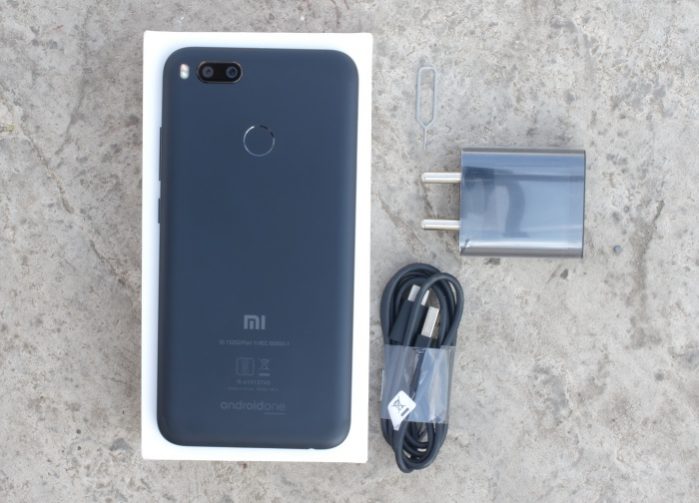
Here'due south everything you get inside Xiaomi Mi A1's retail packaging:
- Mi A1 (apparently, you cannot miss this one)
- 5V Ability Adapter
- USB Type-C Cable
- User Guide
- SIM ejector tool
Blueprint and Build Quality
The moment yous pull the plastic wrapping off the Mi A1 and have it in your hand, y'all won't feel as though you're holding a budget phone. Xiaomi has made employ of, yes you guessed it right, aluminum to carve out the structure of the sturdy Mi A1 device. The Chinese giant has, however, put very trivial idea into the design of the device and it now looks to take copy-pasted the iPhone vii Plus or OnePlus 5 design.
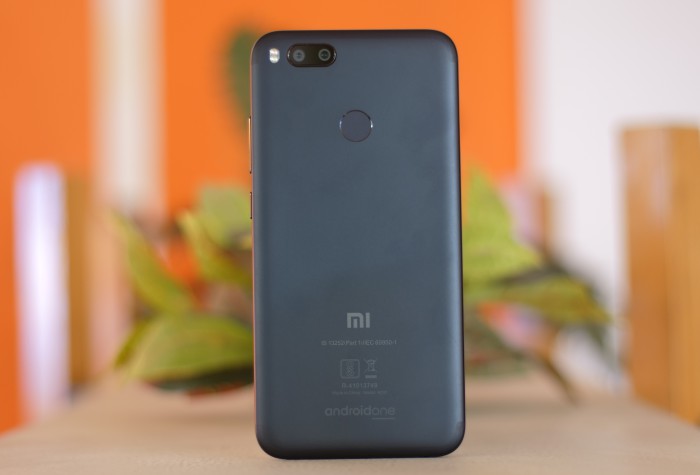
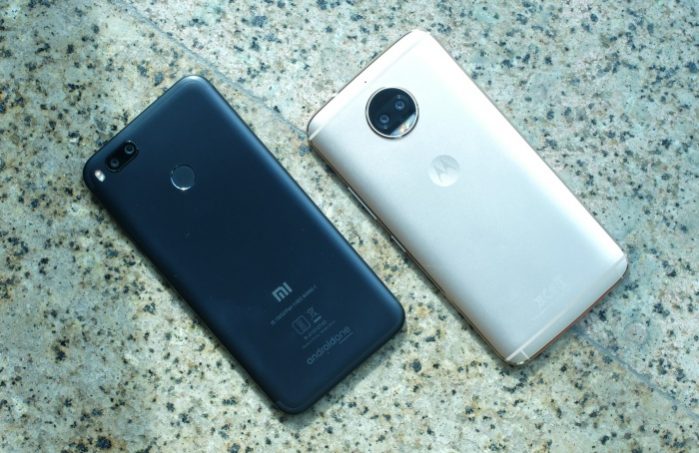
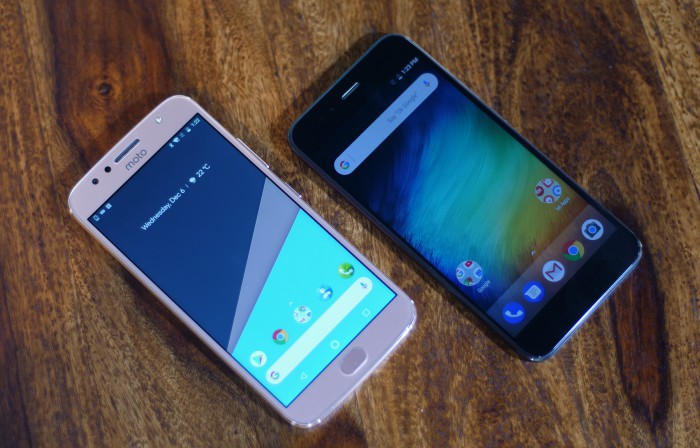
The Mi A1 rocks a pretty solid build and feels quite comfortable in the hand but not as good as the Moto G5s Plus, to be honest. The Moto G5s Plus shows off an original design, even when information technology is also carved out of metallic. The rounded camera bump, a placeholder for the dual-lens setup and flash, in a higher place the "Moto" logo in the dimple on the rear looks stunning.
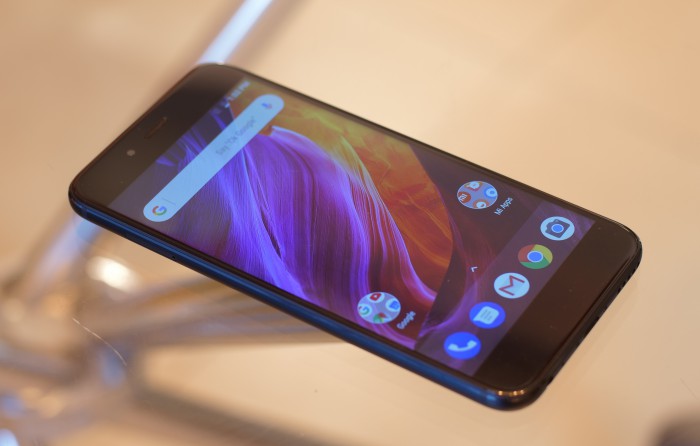
You lot get a big 5.5-inch Total HD display, which sadly does not boast of the trendy new xviii:9 aspect ratio. Xiaomi has stuck with huge top-bottom bezels and physical navigation buttons, providing you with a power cardinal and book rocker on the right and hybrid dual-SIM tray on the left. The buttons are not at all squishy and it is a pleasure to use them.
The rear of the device packsa dual camera setup, much like to the iPhone 7 Plus in looks and a decently fast fingerprint sensor at the center. This is my favorite position for the biometric sensor as my index finger naturally rests at the said position. The Moto G5s, on the other paw, places the fingerprint sensor in the front on the bottom bezel. It may brand information technology easy to unlock the phone when it's laying flat on the table and that's all.
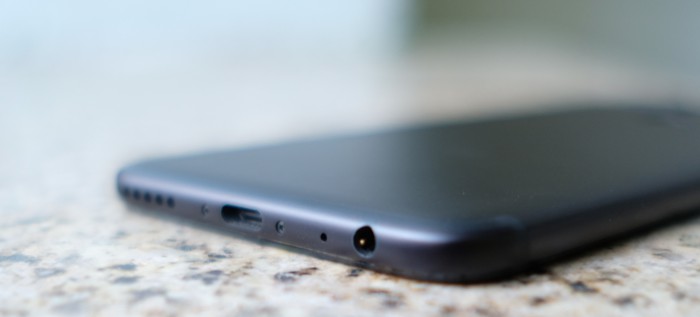
The Mi A1 besides includes a 3.5mm headphone jack, which is steadily becoming a luxury in phones and USB Type-Ccharging port that is amazing to have at this price point. The add-on of the latter to the Mi A1 could inspire other budget phone makers to update their charging ports in their side by side-gen device launches.
The curvaceous metallic structure of the Mi A1 may feel quite skilful in the mitt and prevent fingerprint smudges but information technology is really slippery. I was in constant fright that the device will skid through my fingers any instant only thankfully information technology didn't. This also made the usage of Mi A1 with a single paw a nightmare and stock Android is what saved me. I no longer needed to reach out and pull downward the notification shade as I activated fingerprint gestures to simplify this task. Thus, I'd recommend y'all to put a case on the device the moment you buy it.
Display
The Mi A1 sports a 5.5-inch Full-Hd display, which is bully simply definitely not the highlight of this device. Xiaomi hasn't compromised a bit on this front and incorporated a super-bright LTPS (Low-Temperature Poly-Silicon) LCD display, which has a larger pixel density and low power consumption as compared to other LCDs, on the Mi A1. Information technology is non as good as an AMOLED panel simply it didn't hinder my usage on the daily ground.
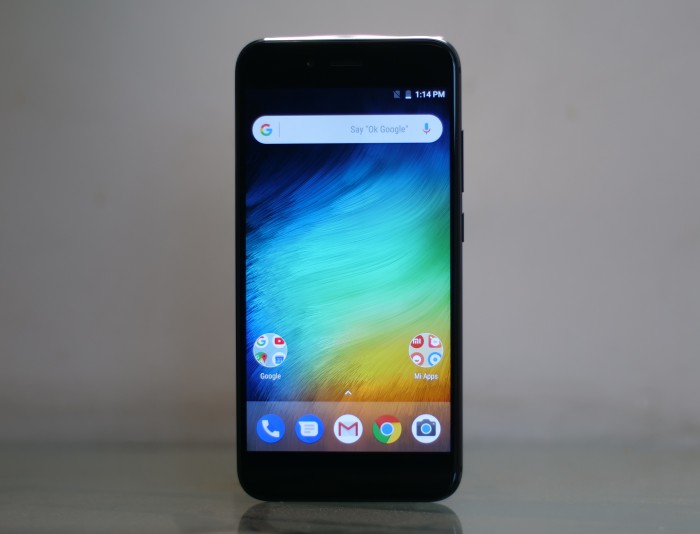
I'd have much preferred to see a larger eighteen:9 display on a device launching in the second one-half of 2017 but I have no qualms with the panel on the Mi A1, which is much amend than previous budget devices released under the Android One programme. Information technology boasts of a display resolution of 1920 ten 1080 pixels, calculation up to a PPI of effectually 403.
The impact was extremely responsive and I didn't encounter any unusual bug with the display. The screen was super bright indoors, as well equally outdoors, without any color fading that'd have made reading the screen a huge chore. The Chinese giant boasts that the LCD display on the Mi A1 has 1000:1 contrast ratio and can get every bit bright as 450 nits, which proved to exist quite true during my tests.
User Interface
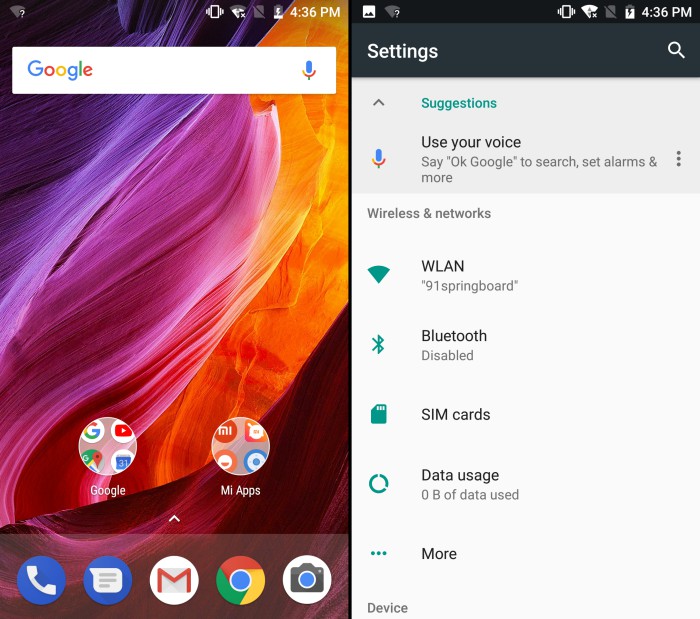
Without a doubt, the highlight of the Mi A1 is its stock Android experience that most users tend to crave on their bloatware-laden smartphones. The Mi A1 is running Android 7.1.2 Nougat out of the box, with an update to Android Oreo promised by the finish of this yr.
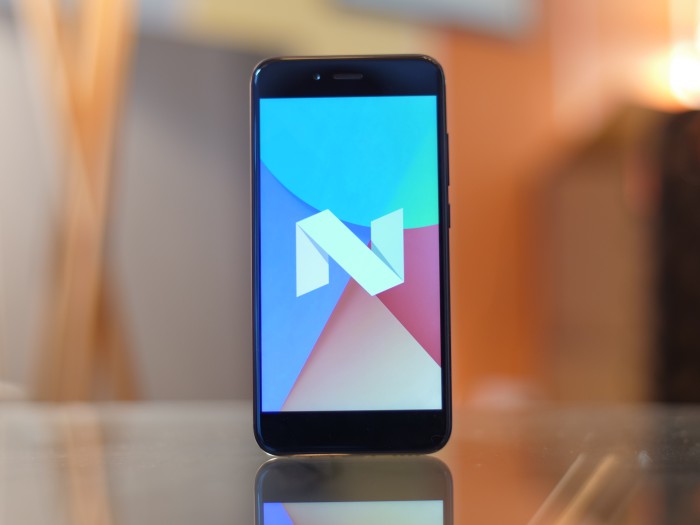
While you may expect a bloat-costless experience on the Mi A1, it stillcomes with a handful of Mi apps in tow. You can, however, choose to uninstall the Mi apps, except the default camera app, if you wish so. The camera app has been adult by Xiaomi to support the dual-lens setup since Google Camera cannot practise the same.
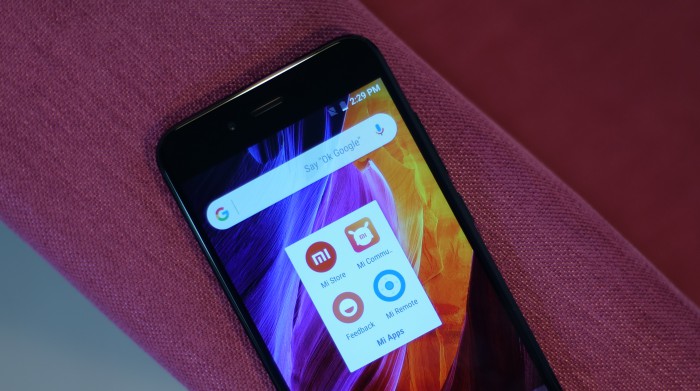
While there accept previously been doubts virtually whether Xiaomi will be able to deliver the Oreo update in fourth dimension, the Chinese giant has now confirmed that the update is coming very before long. It has started recruiting beta testers to check out the Oreo update earlier its official release, if non this year and so in January for sure.
The delay in the release of Android Oreo is perhaps because of the time Xiaomi is taking to optimize all of its apps for the current API, especially the photographic camera app. Information technology has also promised that Mi A1 will also receive Android P when it becomes available only null tin can be said at the moment. We'll just have to wait and see if that turns out to be true. The electric current UI is stock Android and looks like this:
Performance & Benchmarks
Since the Mi A1 lies foursquare in the mid-range segment for Xiaomi, the device is powered by the octa-core Qualcomm Snapdragon 625 chipset yet over again. Clocked at 2.0Ghz, this is possibly the 4th Xiaomi smartphone lineup to exist powered by this chipset just at that place have been no potential complaints virtually the same. The functioning of the Mi A1 is acme-notch and why wouldn't information technology be when the software is stock and clean to the core. Here are a few benchmark results to reiterate this betoken:
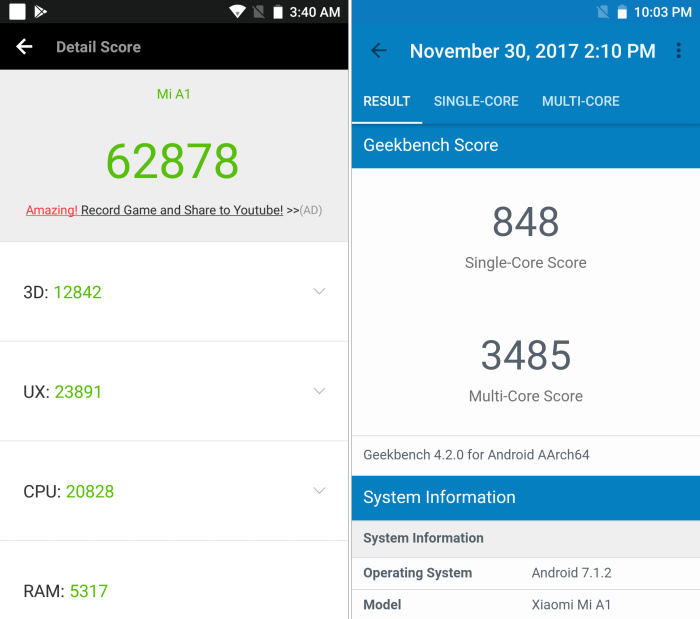
My hands-on experience with the Mi A1 has been by and large positive, with negligible lags or frame drops under normal usage. Even heavy games run quite comfortably but the Mi A1 tends to heat up a fleck over the said period of time. There is some other nagging issue that I faced a couple odd times during the 1 week I had with the device. The Mi A1 randomly reboots out of the blue and it was extremely frustrating when it did that in between app switches.
The Mi A1 wants to be your first selection in this upkeep segment, thus, it is not offer you multiple alternatives for the RAM and storage combo. Xiaomi knows well enough that our average media cosmos and consumption has now increased, so we only need the highest specs for our daily drivers. The Mi A1 comes with 4 GB of RAM and 64 GB of internal storage simply you can nonetheless upgrade the storage by up to 128GB using a MicroSD card. This will come up in handy when you're out shooting 4K videos or high-resolution pictures.
Cameras
Falling in line with the ongoing trend, the Mi A1 sports a dual-lens rear camera setups, that is quite similar to the ane we've already seen on the iPhone 7 Plus previous year. You get a 12-MP broad-angle and scope lens on the Mi A1, with f/two.2 and f/2.6 aperture respectively. The device doesn't apply the stock Google Camera app but instead, it includes Xiaomi's own camera app because Google Photographic camera does non include native support for dual lenses on the software front.
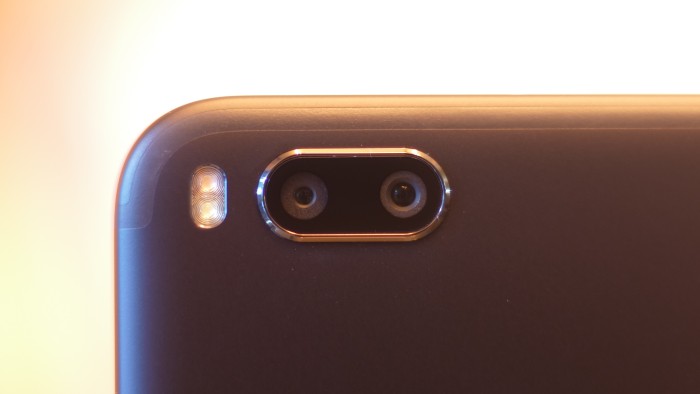
While capturing casual photos, Xiaomi's photographic camera interface is quite intuitive and easy to like. The colour reproduction and sharpness of the photos captured with the dual-lens organisation in the daytime are on-signal. The secondary telescopic lens makes it simpler for you lot get closer to subjects but does introduce some noise in the pictures. The shutter speed is good and no major lag was detected while clicking photos but the aforementioned cannot be said for the app when using the portrait mode.


The photographic camera app becomes unresponsive for a couple odd seconds when clicking a portrait shot, which can become on your nerves if you program to capture multiple pictures. The portrait mode on Mi A1 is comparable to Xiaomi's current flagship device Mi 6, which has received loftier praises, in general. The bokeh (mistiness) consequence is a niggling too overpowering, but the camera is doing a good job in edge detection and sharpening the subject in focus.


The said camera system is meliorate than any other dual-lens setup that'south bachelor in the under ₹15k price segment, especially the Moto G5s. It, however, fails to focus on the discipline sometimes but a quick restart does help solve the issue. The camera does not perform equally well in low-light conditions but it does capture some decent photos for the price indicate. Here are few samples:
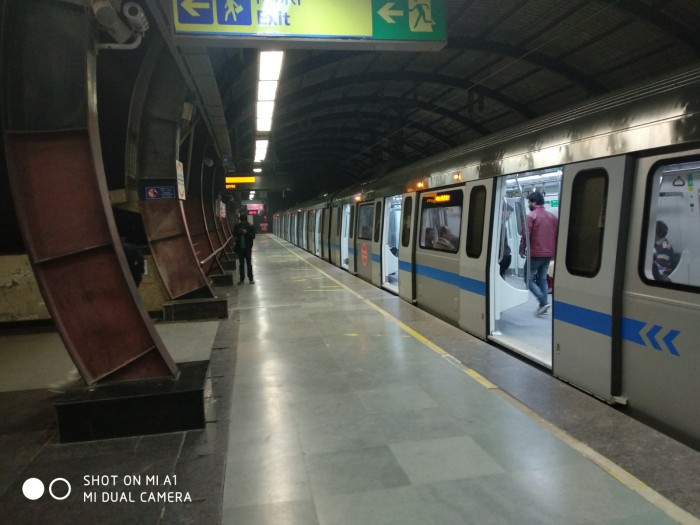

As for the selfie camera, information technology is a unmarried five-megapixel shooter that's half-decent. Y'all'll be able to capture some proficient shots, including grouping selfies if the lighting conditions are right just I would suggest you not go too used to the 'beautify' fashion equally it alters your photograph quite a lot. However, without it, the camera softens the prototype and the dynamic range isn't good enough. Hither's how images clicked with and without the beautify mode are as under:


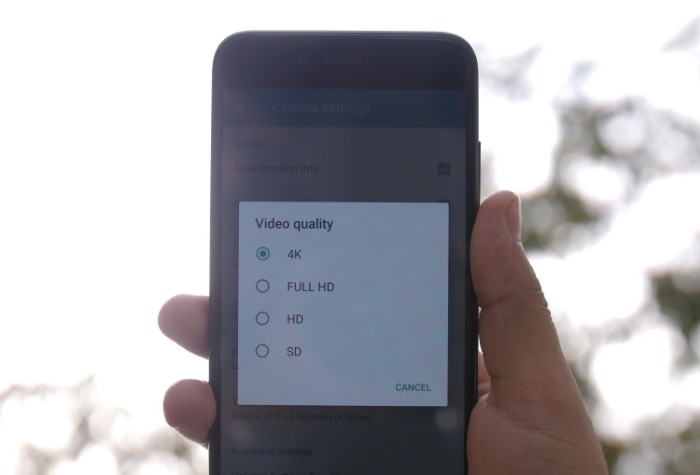
Also due to the smaller f/two.6 discontinuity of the front end lens, the Mi A1 doesn't capture the best selfies in low-calorie-free weather. The facial recognition feature, on the other hand, seems to have improved a lot as compared to my oh-so-one-time Redmi Note 3. The video recording capabilities of the Mi A1 are undoubtedly bang-up because you can now capture 4K resolution videos using the dual-lens rear camera setup. The output is quite good but the lack of OIS or EIS is surely visible in the form of some abvious shakiness.
Audio and Telephony
After spending around a week with the Mi A1, it is only off-white to say that you wouldn't see any major signal loss or interference during calls. The sound quality is quite crisp and the earpiece is loud plenty for you to hands hear the caller. Audio calls sounded equally well on both sides, thanks to the dissonance cancellation microphone up-meridian.

The Mi A1 includes a bottom-firing speaker and this is not the perfect placement for the same. Xiaomi should've stuck with its usual rear placement of the speaker as information technology'south now quite easy for the manus to embrace the pocket-size speaker at the bottom, muffling out all the sounds while playing games or watching any video/movie in mural mode.
The speaker is decently loud with non every bit much bass as you might take expected. The stock Android could do with more book steps in audio controls to brand it easier for users to control the experience and not burst your eardrums all of a sudden.
Connectivity
Like any device in the upkeep segment for the Asian market, the Mi A1 includes the usual prepare of connectivity options. You'll get the hybrid dual-SIM tray, where you can either choose to employ two SIM cards or couple a single SIM bill of fare with a MicroSD card. The device supports major uniform networks, along with VoLTE support for those providing the functionality. I was able to examination the aforementioned with my Reliance Jio SIM carte and everything worked buttery shine.
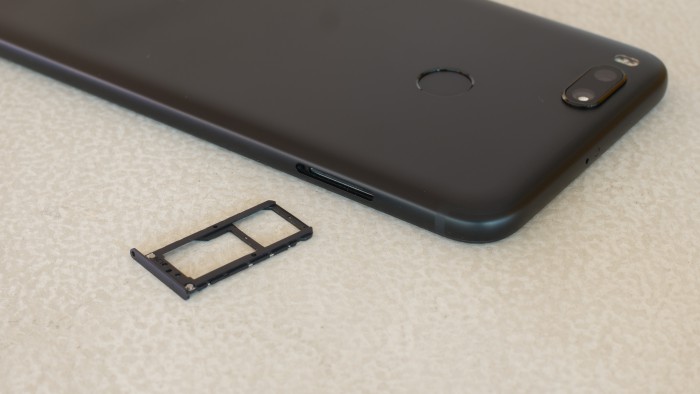
The device also supports the latest Wi-Fi 802.11a/b/g/n/ac, forth with Wi-Fi Direct which makes it simpler to print, share, sync and stream content to other devices. Bluetooth 4.2, which is not the latest protocol is also included in this device, forth with HID (Human being Interface Device) profile that's been designed to provide a low latency link, with low power requirements.
And similar other Xiaomi phones, y'all also get an IR equalizer that can be used to control devices around the firm. You tin utilise the Mi Remote app, which comes pre-loaded on the device, to control the Television set, set up-tiptop box, air conditioner and more. It actually does come in handy as I no longer demand to squander effectually for my remote and can control the Idiot box with my phone itself.
Battery And Charging
The size of the battery pack is one of the first things that nosotros demand a check mark against to consider buying a smartphone. The Mi A1 includes a decent 3,080mAh non-removable lithium-ion bombardment pack that is plenty to easily concluding you a whole mean solar day without having to plug-in to accuse the device. In all my fourth dimension with the Mi A1, the device survived a whole day on medium to loftier usage, with some accuse left to spare. I got a total screen fourth dimension of about four-5 hours, which is definitely good for a budget device.
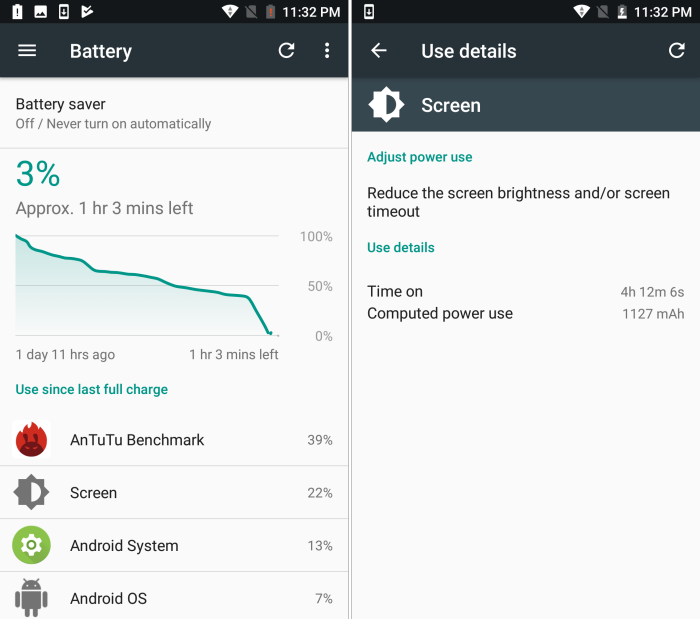
Though the smaller battery pack lasted me an entire day, thanks to stock Android's Doze and battery optimization features, merely charging the Mi A1 is still a chore. I'g happy that Xiaomi is adopting the USB Type-C standard with the Mi A1 but has left quick charging out of the mix. The device takes a couple odd hours to fully charge merely it volition have been perfect with quick charging, which would have made it possible to sneak in a quick charge when you lot're about to go out.
Is Xiaomi Mi A1 The Best Budget Android Smartphone?
As nosotros're nearing the terminate of 2017, you lot may exist looking to replace your electric current smartphone with a brand new one in the coming weeks. If your upkeep is low and you lot've been scouting for a good mid-range device and so Mi A1 could exist the perfect device for you. This is as well the all-time time to go out and buy the device every bit information technology's available at a handsome disbelieve correct now.
Compared to its competitors, the Mi A1 shines quite bright and stands out from the oversupply with its superior and intuitive user feel. The stock Android ROM loaded on the Mi A1 does help but the overall build quality is also a major contributing cistron for the same. The Mi A1 packs a powerful processor, dual-lens rear cameras and vanilla Android for ₹15,000, which is a bang for the buck in my stance. Just, if yous're looking for other options, you lot volition surely have stumbled upon competitors similar Moto G5s Plus and Honor 7X.
While the Moto G5s Plus at ₹fifteen,999 is very much like to the Mi A1 in terms of ability and features, information technology is rather bulky and the protruding camera doesn't look the best. Honor 7X, on the other manus, starts at ₹12,999 could lure users abroad from Mi A1 with its taller eighteen:9 display just y'all will not become the intuitive stock Android experience on the same. Thus, Mi A1 is definitely the best choice in the budget segment at this moment.
Pros:
- Undoubtedly, the stock Android feel
- Not bad Portrait mode pictures
- Presence of the three.5mm headphone jack
- Excellent pricing
Cons:
- Quite glace in the hand
- No Android 8.0 Oreo update yet
- Sudden reboots, out of the blue
Buy Xiaomi Mi A1 (₹fourteen,000)
SEE As well: Xiaomi Starts Android eight.0 Oreo Beta Testing
Xiaomi Mi A1: Android One Done Right
While Google has done its part to revive the Android Ane program, Xiaomi is changing the status of this forgotten program by providing you with a premium experience for a bargain. Information technology has broken the sodden mold that was previously defined by Google and built a device for anyone looking to get abroad from a skinned version of Android (or iOS, for that thing).
Mi A1 is one of the most premium devices available for ₹15,000 in the Indian marketplace. Practice yous plan on purchasing the Xiaomi Mi A1? If yes, what'due south the prominent factor that pushes you to make this decision? Let u.s.a. know in the comments section down below.
| REVIEW OVERVIEW | |
| Pattern and Build Quality 8.five | |
| Display viii | |
| User Interface nine.five | |
| Functioning viii | |
| Cameras 8.5 | |
| Telephony and Audio viii | |
| Connectivity 9 | |
| Battery and Charging 9 | |
| SUMMARY With a premium metallic build coupled with an intuitive stock experience under the Android 1 programme, the Mi A1 has turned out to exist the top contender in the budget smartphone segment. The average photographic camera operation and delayed Oreo update are the two major disappointments. | 8.6 OVERALL SCORE |

Source: https://beebom.com/xiaomi-mi-a1-review/
Posted by: wilcoxuntio1958.blogspot.com
0 Response to "Xiaomi Mi A1 Review: Android One Done Right"
Post a Comment